
The broader NSE Nifty reclaimed the 11,600 level, zooming 326 points or 2.9 per cent to settle at 11,600.20. Top gainers in the Sensex pack included Bajaj Finance, L&T, Asian Paints, ITC, Axis Bank, Kotak Bank, ICICI Bank, HDFC twins, Maruti and SBI, rallying up to 8.70 per cent.

Overall market benchmark Sensex is headed for its worst performance in four years with a decline of 1,650 points

From the Sensex pack, Infosys jumped the most by 3.67 per cent. Asian Paints, HCL Technologies, Reliance Industries, ICICI Bank, Wipro, NTPC, Tech Mahindra, Bajaj Finserv and Larsen & Toubro were among the other major gainers. State Bank of India, Bajaj Finance, Titan, Tata Steel, Tata Motors and UltraTech Cement were among the laggards.

Market experts poohpooh fears of capital flight from India.

Bulls might be on the rampage on Dalal Street but lofty valuations of the Indian equities present a reason for concern and the markets could perhaps witness up to 10 per cent correction, according to analysts. Benchmark indices have been on a record-breaking rally lately and August witnessed the stock market reaching many new highs. The BSE benchmark soared over 9 per cent last month.

The market capitalisation of BSE-listed firms jumped to an all-time high of Rs 304.53 lakh crore on Wednesday, buoyed by an unprecedented rally in equities where the BSE benchmark Sensex ended over the 67,000-mark for the first time ever. Rallying for the fifth day running, the 30-share BSE Sensex climbed 302.30 points, or 0.45 per cent, to end at its lifetime closing high of 67,097.44 points. During the day, it jumped 376.24 points, or 0.56 per cent, to reach its all-time intra-day peak of 67,171.38 points.

Ask rediffGURU and tax expert Mihir Tanna your income tax-related questions.

As many as 31 mainboard IPOs raised a cumulative Rs 26,272 crore in this period, according to Prime Database. During the April-September 2007 bull run, 48 IPOs totalling Rs 21,243 crore were launched. The number of deals in H1FY24 was 2.2 times that of the same period of the last fiscal year, but the amount raised was 26 per cent lower.

Tracking losses in the broader market that has seen the Nifty Smallcap 250 index and the Nifty Midcap 100 indices slip 9 per cent 6.1 per cent in the last three sessions, the frontline Nifty 50 index has remained resilient and registered a fall of 2.2 per cent during this period. Going ahead, can the nervousness in the mid- and small-cap universe spread to the large-cap peers? Most analysts do not think so. They expect a minor dip and a sharp recovery as investors flock to the large-caps in search of safety and value buying as the mid-and small-caps falter.

Markets could slide again owing to conditions in Europe and the US.

Infosys was the top gainer in the Sensex pack, jumping over 4 per cent, followed by Tech Mahindra, Tata Steel, ICICI Bank, ITC, Maruti, SBI and Axis Bank. On the other hand, HCL Tech, M&M, Dr Reddy's, Asian Paints, Bajaj Auto and Bharti Airtel were among the laggards.

'Long-term retail investors should not worry about these sharp dips and jumps if they have chosen their stocks wisely.' 'Short-term volatility is a given and a rise and fall of two-three per cent should not worry them.'

Ajay Bagga, CEO, Lotus India Mutual Fund, feels the government should have taken timely action to control inflation. He feels that the recent fall is not a bull-market correction but a serious downturn that could last for about six to eight months. He said the government cannot afford to keep interest rates this high. It is likely to cut rates once the inflation moderates. Meanwhile the rupee will be allowed to appreciate to compensate for the rise in global commodity prices.
This is a crucial advantage traders enjoy over investors -- the ability to make money whether the market is moving up or down. This fact should not, however, lead you to believe that trading is easy; it requires both a skill-set and rigorous discipline.
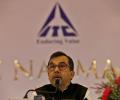
ITC stock slipped over 4 per cent on Thursday (February 8) after British American Tobacco (BAT) said it could sell some of its stake in the company, recovering partially in trade. The stock of the cigarette-to-hotels conglomerate traded at Rs 420 levels, rising 1.3 per cent in intraday deals as compared to the S&P BSE Sensex that traded flat for most part of the day. The development, meanwhile, saw Jefferies downgrade the stock to 'hold' from 'buy' earlier with a target price of Rs 430, down a huge 17.3 per cent from its earlier price target of Rs 520.

There is room for caution as we are in a very mature bull market in the US and a sudden slide there will have ramifications for Nifty, says Sonali Ranade
Why should promoters have an option to buy shares when other shareholders don't? Perhaps warrants can be done away with altogether since most promoters don't seem convinced about the value of their companies, says Shobhana Subramanian.

Investing in the US market provides Indian investors a hedge against the rupee's long-term tendency to depreciate against the dollar.

Shares of One97 Communications (OCL), which provides financial services under the brand 'Paytm', and has a banking arm Paytm Payments Bank (PPBL), hit the 5 per cent upper circuit at Rs 428.10 on the National Stock Exchange (NSE) in Monday's (February 26) intraday trade. The up move in the stock on Monday came after the Reserve Bank of India (RBI) asked the National Payments Corporation of India (NPCI), in post stock market hours, to look into the possibility of migrating PPBL customers, using the UPI handle '@paytm', to four-to-five other banks.

TCS was the top gainer in the Sensex pack, rising over 3 per cent, followed by HUL, UltraTech Cement, Nestle India, Kotak Bank, Dr Reddy's and Titan. NSE Nifty surged 157.90 points to 17,234.15.

Infrastructure funds, which bet on stocks closely linked with infrastructure development in the country, have emerged as one of the best-performing categories over the past year. They have generated an average return of 90.63 per cent - the third-best, after technology funds and small-cap funds. Of the 21 schemes in the category, seven have given a return of more than 100 per cent in a year.

Investors indulged in profit booking at attractive and higher valuations
Investors have a reason to cheer as the Sensex continues to stay above the psychologically significant 20,000 mark.
Valuations are not exactly cheap and there are global factors, which are probably not conducive to a very strong bull market rally
While the long-term sustainable job recovery in the US markets could be a possibility in the not so distant future, there are no such luxuries for its Indian counterpart.

'His track record in the market has been spotless and untainted.' 'That is why he had such great fan following among investors.'

From the Sensex pack, Larsen & Toubro jumped 4.26 per cent to emerge as the biggest gainer, followed by IndusInd Bank, Tech Mahindra, State Bank of India, HCL Technologies, Power Grid, NTPC, Axis Bank, Kotak Mahindra Bank, HDFC Bank and Wipro. Mahindra & Mahindra, Infosys, UltraTech Cement and Hindustan Unilever were the major laggards.

Accommodative monetary policy has driven a bull market in stocks in recent years, but the Bank of England is expected to raise interest rates early next year and the U.S. Federal Reserve not long after, tempering future gains.
Two small cap ideas are Mount Everst and Gati. Both for patient investors.\n
India could very well be the great bull market of the 21st century.

The midcap space in the US is red hot. The Russel 200 Index that represents 2000 names in the US midcap space closed the week at 905.24. Recall, the same index topped at 856 in the bull market that ended in 2007. So in fact the midcap index has already made a new high some 5.7 pc over the 2007 peak, says Sonali Ranade

The trend still looks bullish but there are bursts of profit-booking above 7,250.
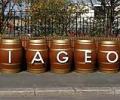
Soon after acquiring strategic management control of Vijay Mallya's crown jewel, United Spirits, Diageo has swung into action, making up for years of lost time in trying to figure out the Indian market.
Your asset allocation strategy should take into account the goals you want to reach with your funds, your investment horizon and your age

After outperforming the broader market and their public sector peers for the better part of the post-Lehman period, private sector banks - such as HDFC Bank, ICICI Bank, Axis Bank, and Kotak Mahindra Bank - are now underperforming. Last week, the Nifty Private Bank index was up just 6 per cent year-to-date in the calendar year 2021, against nearly 13 per cent rally in the Bank Nifty and a 15 per cent rise in the benchmark Nifty50. Public sector (PSU) banks, such as State bank of India, Bank of Baroda, and Punjab National Bank, are now rally leaders and outperforming the broader market. The Nifty PSU Bank index was up 42 per cent since the beginning of this calendar year. But on a longer term, the Nifty Private Bank index is up 101 per cent since March 2016, against a 118 per cent rally in the Bank Nifty and just 2 per cent rise in the Nifty PSU Bank index in the period.
Experts like National Commodity and Derivatives Exchange Managing Director and CEO P H Ravikumar feel that the commodities market will steal the thunder in the coming days. The next bull run is not in stocks but in commodities, he said.

Retail investors usually get caught up in the frenzy of a bull market and burn their fingers in IPOs, warns Tinesh Bhasin.
